CDCS Course at a Glance
Build the knowledge and judgement to examine documentary-credit presentations, identify supported discrepancies and explain the next step.
What is CDCS?
The Certificate for Documentary Credit Specialists is a specialist trade-finance qualification from LIBF, part of Walbrook Institute London. Its full qualification name is the LIBF Level 4 Certificate for Documentary Credit Specialists.
This course prepares you for the documentary-credit qualification, not a data-centre certification with the same acronym. EduDelphi provides teaching and preparation; LIBF controls qualification registration, assessment and the award.
Who should take this course?
Bank trade-operations professionals, documentary-credit examiners, trade-services teams, and import/export or regional trading-company professionals who want deeper knowledge of letters of credit and document examination.
Learn to connect LC terms, documents, ICC rules and operational decisions. If you need a broader foundation first, compare our CITF course in Singapore; CITF is not a compulsory prerequisite.
Official CDCS recognition and learner benefits
LIBF reports more than 31,000 CDCS holders across 114 countries. Officially registered learners become Members of LIBF (MLIBF) while studying, with access to its membership benefits.
Successful candidates are added to the international CDCS Registry; updates may take up to 30 days after results. Recertification every three years keeps the designation and registry listing current.
These are benefits of the official LIBF qualification route, separate from EduDelphi tuition. See LIBF’s qualification and registry information.
Read our CDCS qualification guide for a broader introduction to the route.
What Your CDCS Course Includes
A connected course—not just a stack of notes. Learn with faculty, practise with documents and use feedback to make revision more effective.
Live specialist teaching
40–60 live faculty-led training hours covering FODC and MGDC, rule application, document reasoning and exam preparation.
Document-checking practice
Guided examples, complete presentation sets and focused drills help you distinguish genuine discrepancies from issues that are not supported.
Questions and multiple mocks
Unit-specific practice, multiple full-length mocks and clear explanations. Review missed points, close alternatives and decisions made under time pressure.
Live support and feedback
Ask questions in live doubt-clearing sessions, discuss your reasoning with faculty and use feedback to target weaker areas.
A powerful AI-supported LMS
Recordings, notes, mind maps, infographics, checklists, glossary, reference resources, study planners, an AI study assistant and much more—all organised for learning and revision.
Study guidance and training certificate
Help with your study route and official registration process, plus an EduDelphi certificate of training. The official CDCS qualification is awarded separately by LIBF.
EduDelphi practice and learning resources support your preparation. Official qualification registration and its resources are separate from EduDelphi tuition.
CDCS Syllabus: FODC and MGDC
Prepare for the current two-unit structure. Understand how documentary credits work, then apply that knowledge to presentations and practical decisions.
FODC — Foundations of Documentary Credits
10 credits · 100 official total qualification hours
Credits, parties and responsibilities
- Purpose and characteristics of documentary credits
- Applicant, beneficiary and bank roles
- Issuance, advising, confirmation and amendments
- Availability, honour, negotiation and payment arrangements
- Credit terms and the underlying commercial transaction
Rules, documents and transaction risk
- UCP 600 and international standard banking practice
- Documentary requirements and presentation principles
- Reimbursement arrangements and URR 725
- Relevant standby-credit principles and ISP98
- Party, operational and cross-border trade risks
Build a clear understanding of each party’s obligation before moving into complex document checking.
MGDC — Management of Documentary Credits
20 credits · 200 official total qualification hours
Examine presentations
- Commercial invoices and supporting documents
- Transport documents, shipment evidence and dates
- Insurance documents and required cover
- Consistency across the credit and presented documents
- Applying current ISBP 821 alongside UCP 600
Make and explain decisions
- Identify valid discrepancies and avoid false positives
- Handle presentation, expiry and examination issues
- Understand refusal, waiver, honour and negotiation
- Apply rules to amendments and specialist transaction situations
- Electronic presentation and eUCP context; relevant Incoterms 2020 responsibilities
Practise document-checking simulations and explain the rule behind your decision rather than memorising a discrepancy list.
Live tuition is not the whole study commitment. LIBF identifies 300 total qualification hours across the 30-credit qualification. That includes wider study and assessment preparation; it is not a promise of 300 live EduDelphi teaching hours. Plan independent reading, document practice and mocks alongside your 40–60 live training hours.
See the current official CDCS qualification specification. Rules are taught in their relevant context; not every rule applies to every transaction.
Current CDCS Exam Format and Passing Marks
CDCS has two separately assessed units. You must pass each unit; a stronger result in one does not compensate for an unsuccessful result in the other.
| Unit | Assessment | Time | Marks / pass |
|---|---|---|---|
| FODC | 50 multiple-choice questions | 90 minutes | 50 marks · 70% (35 marks) |
| MGDC | 20 multiple-choice questions plus 3 document-checking simulations | 105 minutes | 50 marks · 70% (35 marks) |
CDCS Pass and Distinction Grades
The current qualification grades use the combined marks from both units, provided you score at least 70% in each individual unit.
| Qualification grade | Combined marks out of 100 |
|---|---|
| Pass | 70–94 |
| Distinction | 95–100 |
MyLIBF analysis sheets show strengths and areas to improve. Use them alongside your practice review to plan further study.
How MGDC document-checking marks work
Each simulation gives ten possible discrepancies. Select five; each correct selection earns two marks. The three simulations account for 30 marks, alongside 20 marks from the multiple-choice questions.
Current examinations are remotely invigilated online through the official Brightspace platform, with same-day results. The registration period is 12 months. Older pages describing a single combined exam or a Pearson VUE booking route do not reflect this current qualification specification.
Qualification facts and reference fees checked 5 October 2026. Official assessment specification.
Learn to Check Documents, Not Just Recall Rules
Start with guided examples, then build confidence with complete document sets, timed questions and expert feedback.
Work through invoices, transport and insurance documents, supporting certificates, shipment dates, amendments and electronic-presentation situations. Compare each requirement with the evidence actually presented.
Feedback that improves your judgement
Faculty help you identify three different problems: a discrepancy you missed, an issue you incorrectly flagged, or a correct decision supported by the wrong reason. Review the applicable rule, then apply it to a fresh example.
Timed practice comes after guided work, so you can build accuracy before adding examination pressure.

Learn with Specialist Trade-Finance Faculty
Technical document expertise and commercial transaction knowledge work together throughout your preparation.
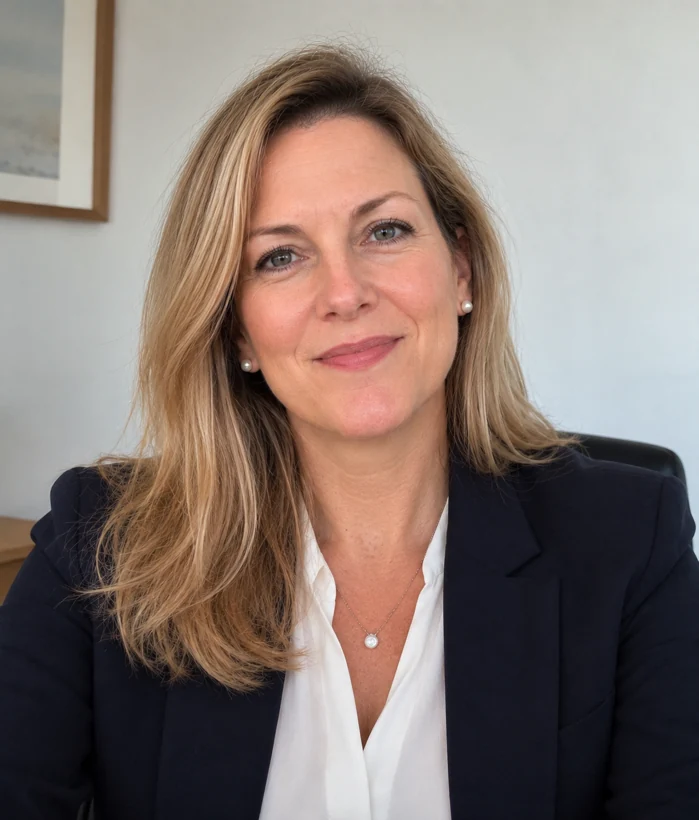
Rebecca Whitmore
CDCS | CSDG | CITR | CDCE
25+ Years in Global Trade Finance, Documentary Credits & Guarantees · 12+ Years in Professional Training
Rebecca brings international experience across documentary credits, guarantees, trade operations and cross-border risk, including work in Europe, Asia and the Middle East.
She leads the technical document-examination perspective: UCP 600, ISBP 821, presentation requirements, discrepancies, refusal and waiver situations.
Her teaching uses document sets, amendments and practical cases to explain which rule applies, whether an issue is valid and what the bank should consider next.
Practical LC Training or CDCS Preparation?
Choose our practical Letters of Credit course for workplace skills in LC terms, documents and common discrepancies. Choose CDCS preparation for the specialist qualification and its examinations.

Rajiv Menon
CITF | CTFP | CSCF | CAMS | MBA – Finance & International Business
18+ Years in Global Trade Finance, Transaction Banking & Working Capital · 9+ Years in Professional Training
Rajiv connects documentary credits with the commercial transaction, bank responsibilities, financing needs and cross-border risk.
For Singapore learners, he brings context from regional trade, corporate treasury and multinational working-capital arrangements.
His sessions strengthen transaction interpretation, confirmation and risk reasoning, helping you understand why a structure is used—not just how its documents are checked.
Your CDCS Learning and Revision System
Use a clear study route with a deep LMS behind it. Resources stay organised around what you need to learn, practise and improve.
Learn
Follow live teaching and revisit recordings. Notes, mind maps, visual summaries, glossary and AI study support help make difficult rules clearer.
Practise
Work through questions, document sets, focused exercises and multiple full-length mocks. Use explanations to understand both correct choices and plausible alternatives.
Improve
Review unit performance and repeated mistakes. Bring questions to live faculty support, use feedback and focus revision on weaker areas.
Singapore Classroom, Live Online and Flexible Study
Choose the main course route that fits your learning style, with the same focus on document reasoning and examination readiness.
Singapore classroom training
Learn face to face, discuss document sets and get direct clarification from faculty. A strong option for professionals who value structured, interactive teaching.
Teaching venue250 N Bridge Rd, Raffles City Tower, Singapore 179101
Live online training
Join faculty-led sessions from anywhere in Singapore. Discuss cases, ask questions and use recordings and LMS resources between classes.
Classroom and online learners can build a study plan around their work commitments. Request current study options rather than relying on a fixed timetable.
Private 1:1, supported self-paced, corporate onsite and private company cohorts are also available. Full-course, single-unit and focused revision options are available.
For an experienced candidate, MGDC-focused revision can concentrate on document checking and timed practice. For a team, delivery can be arranged across Singapore around its location and training needs.
Sample CDCS Practice Question—with an Explained Answer
See how a small difference in the documents changes the examination decision.
This is an original EduDelphi mock question to show how we teach document checking. It is not an official CDCS exam question. You do not need to answer it to enquire about the course.
Example situation
A fictional Singapore exporter presents documents under a documentary credit subject to UCP 600. For this short example, assume there are no other document issues.
Credit terms
- Latest shipment date
- 15 June
- Expiry date
- 30 June
- Presentation
- Within 21 days after shipment, and before expiry
Presented documents
- Bill of lading shipment date
- 18 June
- Presentation date
- 20 June
- Invoice
- Amount and goods description match the credit
Practice question
Which issue is supported: late shipment, presentation after expiry, or presentation outside the stated 21-day period?
See the explained answer
Late shipment. The bill of lading shows shipment on 18 June, after the credit’s latest permitted date of 15 June.
Presentation on 20 June is before expiry on 30 June and is only two days after shipment. On the facts given, neither expiry nor the 21-day presentation period is the supported discrepancy.
The learning point is to test each date against the correct requirement. A presentation can be timely while its shipment is late. Do not treat all date issues as the same problem.
In a complete case, the examiner must review the full credit and presentation. An applicant’s waiver does not automatically oblige a bank to accept discrepant documents; the applicable rules and bank decision still matter.
This short teaching example is not a complete MGDC document-checking simulation. Course practice develops into full presentation sets and timed mocks.
Why Documentary Credit Expertise Matters in Singapore
Singapore’s trading ecosystem connects banks, commodity businesses, regional headquarters, shipping and treasury teams.
Enterprise Singapore’s trade-ecosystem page reports around US$1.9 trillion in offshore trade, approximately 350 global traders and 150 global banks anchored or present in Singapore. These are ecosystem figures—not EduDelphi learner or employer counts. Source: Enterprise Singapore.
For professionals handling documentary credits within this network, the useful skill is specific: compare the credit with the presentation, identify supported discrepancies and explain the bank’s next step. CDCS preparation develops that reasoning through rules, document practice and transaction cases.
How CDCS Connects to Singapore Trade Work
| Work context | Relevant preparation |
|---|---|
| Bank documentary-trade operations | Credit terms, bank obligations, examination discipline, valid discrepancies and appropriate handling. |
| Regional trading and commodity businesses | Understand how LC wording and shipment documentation affect presentation and payment risk. |
| Trade-services and document-checking teams | Compare evidence consistently, explain decisions and recognise issues requiring escalation. |
| Corporate import/export and treasury teams | Prepare for bank-document requirements and communicate more clearly with counterparties and trade-service providers. |
Cases can connect Singapore-based transactions with ASEAN suppliers, overseas buyers, port-dependent shipments and regional distribution. The emphasis stays on documentary-credit decisions, rather than turning the course into a general logistics programme.
Documentary credits remain part of local banks’ trade offerings; see DBS’s trade-finance service guide for a Singapore product example. This is workplace context, not employer endorsement or a promise of a job or salary increase.
Private CDCS Training for Banks and Trade Teams
Develop a shared document-checking approach across your team, with specialist teaching and relevant practice.
- Private cohorts, classroom, Singapore onsite and live-online delivery
- Team study plans and flexible company arrangements
- Document-review cases and multiple mocks with faculty feedback
- Company-specific scenarios using approved, anonymised examples
- Optional practical workshops alongside qualification preparation
Useful for trade-operations leaders, bank L&D teams, regional trade-service centres and corporate document teams. Focus on more consistent examination, clearer escalation and stronger reasoning—not simply completing a syllabus.

CDCS Course Fees in Singapore
EduDelphi tuition: SGD quotation
Request a quotation for classroom, live online, private, supported self-paced or corporate training. Your quotation explains the chosen route and included teaching, LMS, document practice, mocks and support.
Instalment options are available. Ask us to recommend the full-course, single-unit or revision route that fits your needs.
Official qualification costs: separate
Official CDCS registration is paid separately from EduDelphi tuition. LIBF registration includes its official learning resources and first attempts at both units.
| Official item | Reference |
|---|---|
| Full CDCS qualification registration | £750 |
| Resit of an unsuccessful unit | £175 per unit |
Reference fees remain in GBP; no fixed SGD conversion is shown. Checked 5 October 2026. Confirm the current amount with LIBF before purchasing.
Recertification and optional official practice products
Current recertification reference fee: £230, with a £55 late fee where applicable. Additional official specimen assessments are optional: £25 for one unit or £40 for both. These are separate from EduDelphi practice and mocks.
CDCS Eligibility, Registration and Online Exams
There are no formal entry requirements. However, CDCS is a specialist Level 4 qualification designed primarily for documentary-credit practitioners. LIBF notes that it was originally intended for candidates with around three years’ relevant experience. Experienced professionals will find the material more immediately familiar; newer candidates may need additional foundation study. You should be comfortable studying in English at Level 4.
1. Register officially
Complete LIBF qualification registration. Your 12-month completion period begins with registration.
2. Follow your study plan
Prepare FODC and MGDC with official resources, teaching, document practice and revision.
3. Check the exam setup
Review identity, computer, internet, room and remote-invigilation instructions before starting.
4. Complete both units
Use the current on-demand route; no advance appointment booking is required. Both units must be passed.
EduDelphi can guide you through the process and help you plan preparation. Official registration, invigilation and qualification decisions remain with LIBF.
How do CDCS resits and recertification work?
Under the current specification, paid resits are available per unsuccessful unit, with up to three attempts per week and ten within a 12-month period per unit. Build a revision plan before another attempt.
CDCS recertification runs on a three-year cycle. The current route requires 36 relevant professional-development units or re-examination. Check LIBF’s current acceptance and reporting rules before relying on any training for recertification.
CDCS vs CITF, Practical LC Training and CSDG
Choose by the knowledge and work you need to develop, not just the acronym.
| Route | Primary focus | Typical fit |
|---|---|---|
| CDCS | Documentary-credit qualification preparation and document examination | Professionals seeking specialist LC knowledge and examination skills |
| CITF | Broad trade-finance foundation | Learning settlement, financing, documents and trade risk across instruments |
| Practical letters of credit course | Focused workplace processes and document skills | Solving an immediate LC training need without the same qualification scope |
| CSDG | Demand guarantees and standby-credit specialisation | Professionals whose work focuses on guarantee wording, demands and claims |
Explore trade finance courses in Singapore or ask us to compare qualification preparation with a practical workshop.
After CDCS: What Can You Study Next?
Choose the next step by the work you want to deepen. CDCS can be part of a wider trade-finance pathway, not simply the end of your learning.
| Direction | Possible next route |
|---|---|
| More complex documentary-credit cases | CDCE — Certified Documentary Credits Expert |
| Demand guarantees and standby credits | CSDG — Certificate for Specialists in Demand Guarantees |
| Broader advanced trade finance | CTFP — Certified Trade Finance Professional |
| Supply-chain finance | CSCF — Certificate in Supply Chain Finance |
| Trade risk | CITR — Certificate in International Trade Risk |
| A combined LIBF qualification pathway | QTFE — Diploma for Qualified Trade Finance Experts |
How can CDCS contribute to QTFE or Core CTFP?
LIBF’s current QTFE pathway combines CITF or CPCM, CDCS or CSDG, and CSCF or CITR. An alternative is three of the listed Level 4 qualifications. CDCS contributes to the route; it does not award QTFE on its own.
ICC Academy also offers eligible CDCS holders a fast-track Core CTFP package: five core courses plus a final exam. Its current reference price is US$749, separate from EduDelphi tuition. Check eligibility and the current package directly with ICC before purchasing.
LIBF progression requirements · ICC Core CTFP route · ICC CDCE admission details.
Can further qualifications support CDCS recertification?
Yes. Successfully completing recognised programmes during your recertification cycle can contribute towards the required 36 relevant CPD hours or professional-development units.
- ICC UCP 600 & ISBP 821 Practitioner: 10 recognised CPD hours
- ICC Core CTFP: 25 credits
- ICC CDCE: 36 credits—enough to meet the credit total, subject to LIBF’s reporting and recertification requirements
These figures apply to the named ICC programmes, not automatically to EduDelphi training. Check ICC’s recognised recertification programmes and keep your completion evidence.
For your wider learning plan, compare CITF preparation in Singapore and our trade-finance training options. Ask us to help map the next step to your role.
CDCS Course Questions
Can I earn a CDCS distinction?
Yes. The current Distinction threshold is 95–100 combined marks out of 100. You must still achieve at least 70% in each unit. The Pass band is 70–94 combined marks; MyLIBF analysis sheets help you identify strengths and areas for improvement.
How do Singapore eBLs and digital trade relate to CDCS?
Singapore’s TradeTrust framework supports the exchange, verification and transfer of electronic trade documents, including electronic Bills of Lading (eBLs). Singapore incorporated the MLETR framework into its Electronic Transactions Act in 2021; IMDA’s TradeTrust Readiness Programme launched in February 2026 to support interoperable eBL adoption.
Short training scenario: paper B/L or eBL? A Singapore exporter wants to present an electronic transport record rather than a paper bill of lading. Learners discuss:
- What constitutes presentation under this credit?
- What electronic records and formats must the credit permit?
- How does eUCP apply when incorporated into the credit?
- Which compliance and examination obligations remain?
A digital record does not automatically make a presentation compliant. The credit’s terms, applicable rules and document evidence still matter. Read IMDA’s TradeTrust explanation.
Is this CDCS for documentary credits or data centres?
This page is for the Certificate for Documentary Credit Specialists—the LIBF trade-finance qualification. It is not a data-centre course. Teaching covers documentary credits, FODC, MGDC, document examination and relevant ICC rules.
Can I study CDCS in a Singapore classroom?
Yes. EduDelphi offers classroom training at Raffles City Tower, alongside live online, private and corporate options. Professionals across Singapore can choose a route that suits their learning style and work commitments.
Do I need a degree or three years of experience?
There are no formal entry requirements. CDCS was designed primarily for documentary-credit practitioners with around three years’ relevant experience, but that background is not compulsory. Newer candidates may need additional foundation study. We can help you choose the right preparation route.
Can I enrol for MGDC revision or a single unit?
Yes. Full-course, single-unit and focused revision options are available. MGDC revision can focus on complete document sets, valid discrepancies, timed practice and feedback. Tell us what you have already studied so we can recommend the appropriate route.
Are official CDCS registration fees included?
No. EduDelphi tuition and official LIBF qualification registration are separate. Your EduDelphi quotation covers your training package; official registration provides the qualification resources and first exam attempts.
How much independent study should I plan?
Plan substantial reading, document practice and mock review alongside live tuition. LIBF identifies 300 total qualification hours across CDCS. Your actual preparation depends on experience and progress; the 40–60 live faculty-led hours are only one part of the learning journey.
Does supported self-paced study include faculty help?
Yes. Supported self-paced study combines recordings and LMS resources with live faculty support. Use questions, document exercises, explanations and revision resources, then bring unclear points to the trainers.
Can our bank or trade team arrange private training?
Yes. Arrange private cohorts, onsite Singapore delivery, classroom, live-online or blended learning. Team study plans, relevant document cases, multiple mocks and faculty feedback can support your group’s preparation.
How is CDCS maintained after passing?
The current recertification cycle is three years, with 36 relevant professional-development units or re-examination. Official fees and acceptance rules apply. Check LIBF’s current recertification guidance when planning your professional development.
Can my employer sponsor or reimburse the course?
Employer sponsorship and professional-development budgets may be options. EduDelphi can provide the quotation, course outline, learning outcomes and enrolment documentation for your employer’s review. Approval depends on the employer or applicable scheme; funding is not guaranteed.
Are instalments and a certificate of training available?
Yes. Instalment options are available, and your course includes an EduDelphi certificate of training. The training certificate is separate from the official CDCS qualification awarded after meeting LIBF’s requirements.
Request CDCS Course Details
Tell us how you want to study. We will share your SGD tuition, classroom or online options, included resources and a practical CDCS preparation plan.
Choose specialist preparation with experienced faculty, practical document work and dedicated learner support.