Serious CFA preparation for Singapore candidates
EduDelphi combines live faculty teaching, Kaplan Schweser resources, an extensive LMS, question practice, mock exams and personal support in one clear preparation system.
Join active classroom batches in Singapore, attend live online, or arrange private and corporate delivery. Each CFA level can be purchased separately.
More than classes and books
The strongest CFA preparation gives you clear teaching, enough practice, useful feedback and a plan you can follow around work or university.

Expert live teaching
Learn with experienced finance faculty who explain concepts, question logic and exam decisions clearly.
Powerful CFA LMS
Use recordings, notes, mind maps, topic reviews, practice, mocks and revision support in one place.
4,000+ resources per level
Move from topic practice to exam-style questions and full mock preparation without hunting for scattered material.
Kaplan Schweser included
Use trusted Schweser study resources alongside EduDelphi teaching, LMS content and faculty support.
Weekly faculty office hours
Bring difficult concepts, questions and mock mistakes to regular support sessions.
Recordings and revision
Catch up after busy work periods and return to difficult topics before the exam.
Classroom in Singapore
Learn face to face through active classroom batches, with online and blended options also available.
Personal study guidance
Build a realistic study plan for your level, exam window, work schedule and starting point.
CFA Level I, Level II and Level III preparation
Every level needs a different preparation strategy. You can enrol in the level you are currently targeting.
Build the foundation
Concepts, accuracy and MCQ technique
Develop a strong base across Ethics, Quantitative Methods, Economics, Financial Statement Analysis, Corporate Issuers, Equity, Fixed Income, Derivatives, Alternatives and Portfolio Management.
- Topic-by-topic teaching
- Calculation drills and question practice
- Study planning for first-time candidates
- Timed mocks and final revision
Apply and analyse
Vignettes, valuation and deeper judgement
Learn how to select the right information from item sets, connect multiple concepts and apply valuation and analytical techniques under exam conditions.
- Dedicated Vignette Lab
- Advanced valuation practice
- Item-set debriefs
- Weak-area diagnostics and mocks
Make portfolio decisions
Constructed responses and pathway depth
Prepare for portfolio-management decisions, scenario-based questions and concise written responses across the current Level III pathway structure.
- Answer-Marking Clinic
- Command-word practice
- Private Wealth, Private Markets or Portfolio Management context
- Timed written practice and mocks
CFA Program eligibility: can you register for Level I?
CFA Institute currently provides three routes into Level I. EduDelphi can explain the route, but CFA Institute makes the final eligibility decision.
You have completed a bachelor’s degree or equivalent programme.
Your selected Level I exam window is no more than 23 months before your expected graduation date. For Level II, an undergraduate must be within 11 months of graduation.
You have accumulated 4,000 hours of professional work experience and/or higher education across at least three sequential years. Level I work experience does not need to be investment-related.
Which CFA syllabus should you study: 2026 or 2027?
Your exam window determines the curriculum. EduDelphi maps your classes, resources and revision plan to that window instead of mixing material from different exam years.
| Key Level I change | November 2026 | 2027 exam windows |
|---|---|---|
| Ethical and Professional Standards | 15-20% | 10-15% |
| Quantitative Methods | 6-9% | 11-14% |
| Corporate topic | Corporate Issuers: 6-9% | Corporate Finance: 6-9% |
| Equity topic | Equity Investments: 11-14% | Equities: 11-14% |
| Derivatives topic | Derivatives: 5-8% | Derivatives and Risk Management: 6-9% |
| Alternative Investments | 7-10% | 6-9% |
| Portfolio topic | Portfolio Management: 8-12% | Portfolio Construction: 8-12% |
Review CFA Institute’s Level I topic weights. Always match materials to the year and exam window you booked.
2026 CFA syllabus and topic weights by level
The topic lists below show the 2026 exam structure. Candidates testing in 2027 should use the revised curriculum for their exam year. CFA Institute remains the final source for the outline attached to your booked window.
2026 CFA Level I topics and weights
- Ethical and Professional Standards: 15-20%
- Quantitative Methods: 6-9%
- Economics: 6-9%
- Financial Statement Analysis: 11-14%
- Corporate Issuers: 6-9%
- Equity Investments: 11-14%
- Fixed Income: 11-14%
- Derivatives: 5-8%
- Alternative Investments: 7-10%
- Portfolio Management: 8-12%
2026 CFA Level II topics and weights
- Ethical and Professional Standards: 10-15%
- Quantitative Methods: 5-10%
- Economics: 5-10%
- Financial Statement Analysis: 10-15%
- Corporate Issuers: 5-10%
- Equity Investments: 10-15%
- Fixed Income: 10-15%
- Derivatives: 5-10%
- Alternative Investments: 5-10%
- Portfolio Management and Wealth Planning: 10-15%
2026 CFA Level III common core and pathway weighting
- Asset Allocation: 15-20%
- Portfolio Construction: 15-20%
- Performance Measurement: 5-10%
- Derivatives and Risk Management: 10-15%
- Ethical and Professional Standards: 10-15%
- Selected pathway content: 30-35%
Choose your CFA Level III pathway before registration
About 65-70% of Level III remains common core. Your selected pathway represents about 30-35%, and CFA Institute currently does not allow candidates to change pathways after registration.
Portfolio Management
Active and passive equity, fixed-income portfolio strategies, trading and execution, and integrated portfolio management.
Private Markets
Private equity and credit, GP and LP structures, deal analysis, financing, valuation, real estate and infrastructure.
Private Wealth
HNW and UHNW clients, wealth planning, tax-aware decisions, family dynamics, liquidity and wealth transfer.
Not sure which pathway fits?
Compare your career direction, experience and preferred investment context before you register.
A clear route from the first class to exam day
Your course brings teaching, independent study, practice and feedback together so that you always know what to do next.
Practical support built around how CFA candidates actually study
The advantage is not one number of classroom hours. It is a connected system of expert teaching, Schweser, faculty access, practice, feedback and exam-window planning.
Clear information before you enrol
Your written enrolment pack explains the level, delivery mode, live hours, resources, support, access and SGD tuition included in your package.
CFA exam format, study time and charter pathway
CFA Institute owns the CFA Program, examinations and charter. EduDelphi provides preparation and learner support.
| Level or requirement | Current CFA Program information | How EduDelphi supports you |
|---|---|---|
| Level I exam | 180 multiple-choice questions across two 135-minute sessions | Concept teaching, topic questions, calculations and timed mocks |
| Level II exam | 22 vignette-based item sets with 88 multiple-choice questions across two 132-minute sessions | Vignette Lab, item-set practice, valuation and mock debriefs |
| Level III exam | Item-set and constructed-response questions across two 132-minute sessions, with a selected pathway | Answer Clinic, command-word practice, written feedback and mocks |
| Study time | CFA Institute recommends about 300 hours per level on average | 100+ live hours plus extensive LMS study and practice |
| Practical Skills Module | A required PSM at each level, usually taking about 10 to 20 hours | Planning guidance so the PSM is not left too late |
| Results | Normally 5 to 7 weeks for Level I and II, and 6 to 8 weeks for Level III | Guidance on progression and the next study step |
| Charter | Pass all exams, complete PSMs, complete 4,000 hours of relevant experience over at least 36 months and become a CFA Institute member | Clear pathway explanation without confusing training with credential requirements |
Always confirm the latest rules for your exam window directly with CFA Institute.
Typical CFA exam windows by level
CFA Institute currently offers different exam cadences by level. EduDelphi builds the preparation plan backwards from your chosen window.
Do not forget the CFA Practical Skills Module
The PSM is not optional course enrichment. CFA Institute requires candidates to complete at least one Practical Skills Module at every level. Each module typically takes about 10 to 20 hours, so it should be part of the study calendar rather than left until results week.
The same PSM cannot be reused at more than one level.
How much time should you plan for each CFA level?
CFA Institute recommends approximately 300 total study hours per level on average. Your actual requirement can be higher or lower depending on your background, level and previous result.
EduDelphi provides 100+ hours of live faculty-led tuition per level. Your LMS also contains many hours of recorded teaching, notes, topic reviews, practice, revision support and mock preparation. Independent reading and practice remain important.
- Build concepts through live teaching and Schweser reading
- Practise every topic before moving to full mocks
- Review errors and weaker topics with faculty support
- Protect final weeks for revision and timed exam practice
Why CFA maps especially well to Singapore’s investment industry
Singapore is a major Asian centre for asset management, private wealth, banking, fintech and regional investment activity. MAS reported in August 2026 that asset management contributed about 15% of financial-sector output and 13% of employment, with assets under management approaching S$7 trillion.
The CFA curriculum is relevant to work involving investment analysis, valuation, research, portfolio management, wealth, risk and analytical finance. The credential does not guarantee a role or salary, but its body of knowledge maps closely to these five Singapore career environments.

Learn with experienced CFA and finance trainers
Qualified faculty bring technical depth, exam strategy and practical finance context to every level.
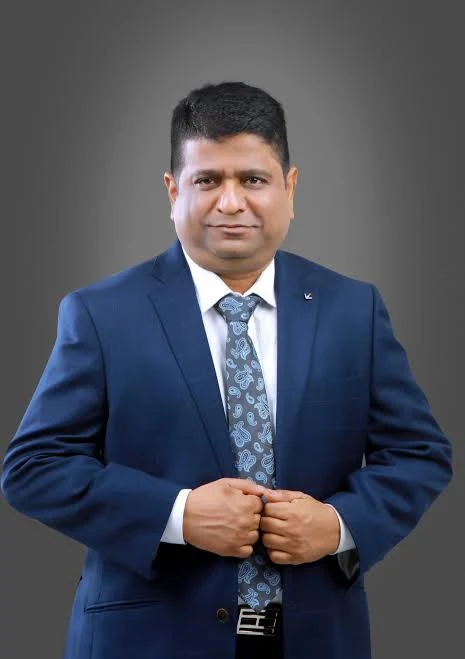
Shyam Sarrof
CPA (USA), CMA (USA), ACA, ACMA, CS, CFA, ACTM, MBA, B.Com (H)
22+ years in finance, reporting, valuation and advisory | 13+ years guiding finance candidates
Shyam connects the curriculum with banking, asset management, wealth, family offices, fintech and regional corporate finance. His teaching is especially strong across Financial Statement Analysis, Ethics, Corporate Issuers, Equity, Fixed Income and valuation.
He also focuses on question interpretation, close answer choices and applying CFA concepts consistently under time pressure.

Sumanth M
CFA Charterholder | B.Tech (IIT) | MBA (ISB)
CFA Levels I, II and III faculty | Investment analysis and exam preparation
Sumanth helps candidates work systematically through the technical depth of all three levels. His sessions cover Quantitative Methods, Economics, Equity, Fixed Income, Derivatives, Alternative Investments and Portfolio Management.
His approach combines question deconstruction, vignette practice, topic drills, mock analysis and targeted revision.
Singapore classroom, live online, private and corporate CFA training
Choose the format that fits your learning preference, schedule and team requirements.
Singapore classroom
Join active face-to-face batches with live faculty, structured practice and full LMS support.
Live online
Attend interactive classes from anywhere, with recordings and the same course support system.
Private preparation
Arrange focused one-to-one or small-group support around your level and exam window.
CFA preparation for Singapore finance teams
Private cohorts can include custom schedules, manager visibility, team study plans, progress reporting, applied finance cases and exam preparation for Level I, II or III.
EduDelphi preparation, Schweser resources and CFA Institute requirements
These are different parts of the CFA journey. We explain them clearly before enrolment.
| Part | What it covers | Who provides it |
|---|---|---|
| EduDelphi course | 100+ live hours per level, LMS, recordings, extensive practice resources, mocks, revision, office hours and faculty support | EduDelphi |
| Kaplan Schweser | Study materials included in your EduDelphi package | Kaplan Schweser |
| CFA Program registration | Official registration, examination, PSM, results and credential requirements | CFA Institute |
CFA course fees in Singapore
EduDelphi tuition is quoted in SGD and depends on the CFA level and delivery format. Level I, Level II and Level III can be purchased separately.
Your written quotation confirms live hours, Schweser resources, LMS access, practice, mocks, recordings and support included in your package.
2026 CFA exam pricing
CFA Institute charges are separate from EduDelphi tuition. For 2026 exam windows, CFA Institute published early registration fees of US$1,140 for Level I and II and US$1,240 for Level III, with standard fees of US$1,490 and US$1,590 respectively. The former one-time enrolment fee has been removed.
These are 2026 exam-window prices. Verify the fee for your actual registration window directly with CFA Institute before paying.
CFA scholarships candidates may consider
Scholarship eligibility, availability and awards are decided by CFA Institute. Do not register for the exam before checking the rules for the scholarship you intend to pursue.
| Scholarship | Who it is designed for | Current fee context |
|---|---|---|
| Access Scholarship | Applicants who may have difficulty affording the full CFA Program fees and are not currently registered or awaiting results | For awards made from 4 March 2026, the registration fee can be reduced to US$400 under the Premium Registration Package, subject to current rules. |
| Student Scholarship | Students currently attending a university participating in the CFA Institute University Affiliation Program | For awards made from 4 March 2026, the registration fee can be reduced to US$600 under the Premium Registration Package, subject to current rules. |
| Professor Scholarship | Qualifying full-time professors and certain administrators or department heads who meet the teaching requirements | For awards made from 4 March 2026, the registration fee can be reduced to US$600 under the Premium Registration Package, subject to current rules. |
Check current CFA Institute scholarships, application windows and eligibility.
CFA vs FRM, CAIA and MBA
CFA is strongest when your main goal is investment analysis, valuation, portfolio management and markets.
| Route | Primary focus | Typical fit |
|---|---|---|
| CFA | Investment analysis, valuation, portfolio management, ethics and markets | Investment, research, asset management, wealth and analytical finance |
| FRM | Financial risk measurement and management | Market, credit, liquidity and operational risk roles |
| CAIA | Alternative investments | Private markets, hedge funds, real assets and alternatives |
| MBA | Broad management and business leadership | General management, strategy, leadership and career change |
What CFA learners say about EduDelphi
Course-specific feedback on teaching quality, support and the learning environment.
“Competitive fees, qualified trainers, and a calm, well-supported learning environment made the journey feel genuinely worthwhile.”
Nadim Maksud
CFA learner
“The trainers explain the material clearly and make sure the concepts are understood, not just rushed through.”
Tayyab Khan Mohammed
CFA learner
“Teaching starts from the basics and then builds the concepts carefully, which made the preparation much easier to follow.”
Rehna Kousar
CFA learner
Plan your CFA journey with clear answers
Frequently asked questions about CFA courses in Singapore
Does EduDelphi offer CFA classroom training in Singapore?
Yes. Active Singapore classroom batches are available, along with live online, private and corporate formats.
Can I enrol for one CFA level only?
Yes. Level I, Level II and Level III can each be purchased separately.
How many live training hours are included?
EduDelphi provides 100+ hours of live faculty-led tuition per level, supported by recordings, LMS study, practice, mocks and revision.
Are Kaplan Schweser resources included?
Yes. Kaplan Schweser study resources are included in the EduDelphi course package.
How much practice is included?
Each level includes 4,000+ EduDelphi questions and learning resources, along with timed mocks, topic review and faculty debriefs.
How much total study time should I plan?
CFA Institute recommends about 300 hours per level on average. Individual requirements vary. EduDelphi helps you divide this time across live classes, reading, practice, mocks and revision.
Does EduDelphi award the CFA charter?
No. CFA Institute owns the CFA Program and awards the charter. EduDelphi provides exam preparation and learner support.
What is the CFA exam format?
Level I uses multiple-choice questions. Level II uses vignette-based multiple-choice questions. Level III uses vignette-supported multiple-choice and constructed-response questions.
Which CFA syllabus should I use for 2026 or 2027?
Use the curriculum for your booked exam window. November 2026 Level I candidates use the 2026 weights. Candidates testing from February 2027 use the revised 2027 structure published by CFA Institute.
Am I eligible to register for CFA Level I?
CFA Institute currently allows entry through a completed bachelor’s degree, the undergraduate route within 23 months of graduation, or 4,000 hours of professional work experience and/or higher education across at least three sequential years. CFA Institute makes the final eligibility decision.
When are CFA exams normally offered?
Level I is typically offered in February, May, August and November; Level II in May, August and November; and Level III in February and August. Always verify the current calendar before planning.
What happens if I do not complete the Practical Skills Module?
CFA Institute requires one PSM at every level before releasing results. Under the current policy, failing to complete it by the deadline can void the result and require registration, payment and retesting at the same level.
Can I change my CFA Level III pathway after registration?
No. CFA Institute currently states that the selected Portfolio Management, Private Markets or Private Wealth pathway cannot be changed after registration.
What is required to become a CFA charterholder?
You must pass all three exams, complete the required Practical Skills Modules, meet CFA Institute’s relevant work-experience requirement and become a member.
Is the course suitable for working professionals?
Yes. Classroom, live online, recordings, LMS access, office hours and structured planning make it easier to prepare around demanding work schedules.
Do you support repeat CFA candidates?
Yes. The Retaker Reset Audit reviews previous preparation and helps rebuild the plan around specific content, practice or exam-day gaps.
How do I get the current SGD course fee?
Submit the enquiry form. Our team will share the current level-wise tuition, included resources, delivery choices and batch information in writing.
Get CFA fees, syllabus and Singapore batch details
Tell us the level you are targeting. We will share the current SGD tuition, course structure, classroom and online options, included resources and a practical next step.
- Level-wise course details
- Singapore classroom and online batch options
- Written list of included resources
- Study-plan guidance for your exam window
- Private and corporate options
EduDelphi Singapore
250 N Bridge Rd, Raffles City Tower, Singapore 179101
CFA Institute is the certification and examination body. EduDelphi is the training provider.
Request CFA course details
Complete the form and our team will contact you with the relevant level information.